REFRACT
Photography Analysis & Enhancement
IMG_1001.jpeg
Multi-LLM Analysis
Consensus Score
Original Review
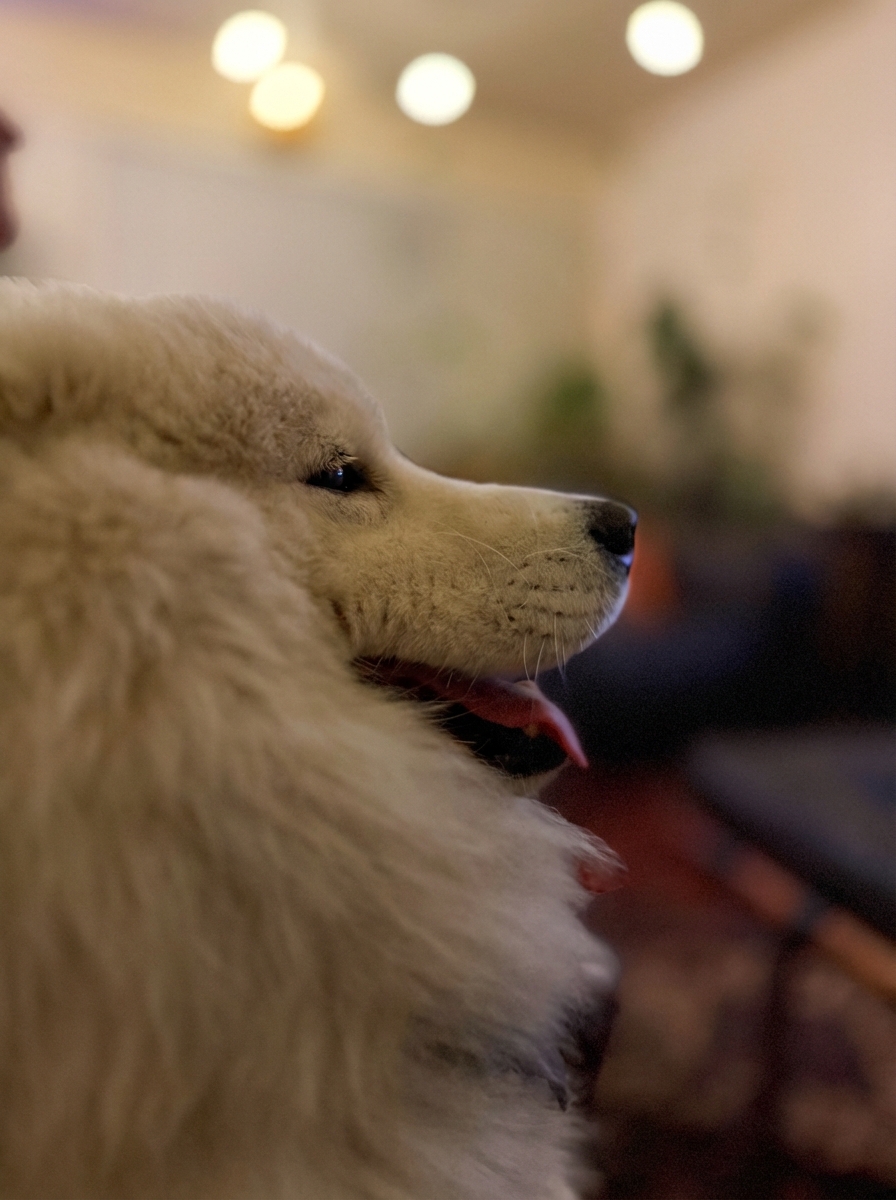
A charming pet portrait hampered slightly by low-light conditions. The editing focus should be on separating the subject from the dim environment by brightening the fur and correcting the color cast without destroying the cozy atmosphere.
- Increase overall exposure and lift shadows
- Cool down white balance slightly
- Apply targeted sharpening to the eye and snout
The image has a pleasing intimate mood with attractive bokeh and a strong canine profile. It’s a touch underexposed with moderate low-light noise, and a small crop plus selective face/eye enhancement would significantly improve subject emphasis while retaining the intended ambiance.
- Raise overall exposure slightly (+0.2 to +0.5 EV) and lift shadows selectively on the dog’s face/neck (+15 to +30) while keeping the background subdued
- Reduce luminance noise (approx. 15–30) and add mild color noise reduction (approx. 20–30), masking sharpening so it targets the eye and muzzle edges
- Local adjustment on the eye: small exposure lift (+0.1 to +0.3), add clarity/texture (+5 to +15), and subtle sharpening to enhance the catchlight
This is a charming candid portrait with good composition and pleasant bokeh, but it suffers from slight underexposure and soft focus on the subject. The white fur appears dull and lacks definition. Priority edits should focus on lifting exposure, sharpening the facial features, and improving tonal separation to make the fluffy coat texture more prominent while preserving the warm, intimate mood created by the ambient lighting.
- Increase overall exposure by +0.5 to +0.7 stops, focusing on lifting midtones and shadows to brighten the dog's white fur while maintaining highlight detail
- Apply selective sharpening to the dog's face, particularly the eye, nose, and whiskers, using an unsharp mask (Amount: 60-80, Radius: 1.0) or clarity adjustment
- Adjust white balance by reducing yellow tones slightly (-5 to -10 in temperature) to achieve more neutral white fur while preserving the warm ambient lighting from the ceiling lights
Combined Improvements Applied:
- Increase overall exposure and lift shadows
- Cool down white balance slightly
- Apply targeted sharpening to the eye and snout
- Apply luminance noise reduction
- Raise overall exposure slightly (+0.2 to +0.5 EV) and lift shadows selectively on the dog’s face/neck (+15 to +30) while keeping the background subdued
- Reduce luminance noise (approx. 15–30) and add mild color noise reduction (approx. 20–30), masking sharpening so it targets the eye and muzzle edges
- Local adjustment on the eye: small exposure lift (+0.1 to +0.3), add clarity/texture (+5 to +15), and subtle sharpening to enhance the catchlight
- Tame bright bokeh highlights using highlight reduction (-20 to -40) or a subtle radial burn around the top lights; optionally reduce their saturation slightly
- Crop slightly from the left edge to remove the partial, out-of-focus face intrusion and tighten framing around the dog’s profile
- Increase overall exposure by +0.5 to +0.7 stops, focusing on lifting midtones and shadows to brighten the dog's white fur while maintaining highlight detail
- Apply selective sharpening to the dog's face, particularly the eye, nose, and whiskers, using an unsharp mask (Amount: 60-80, Radius: 1.0) or clarity adjustment
- Adjust white balance by reducing yellow tones slightly (-5 to -10 in temperature) to achieve more neutral white fur while preserving the warm ambient lighting from the ceiling lights
- Increase whites slider (+15 to +25) and decrease blacks slightly (-10 to -15) to add tonal separation and dimension to the dog's fluffy coat texture
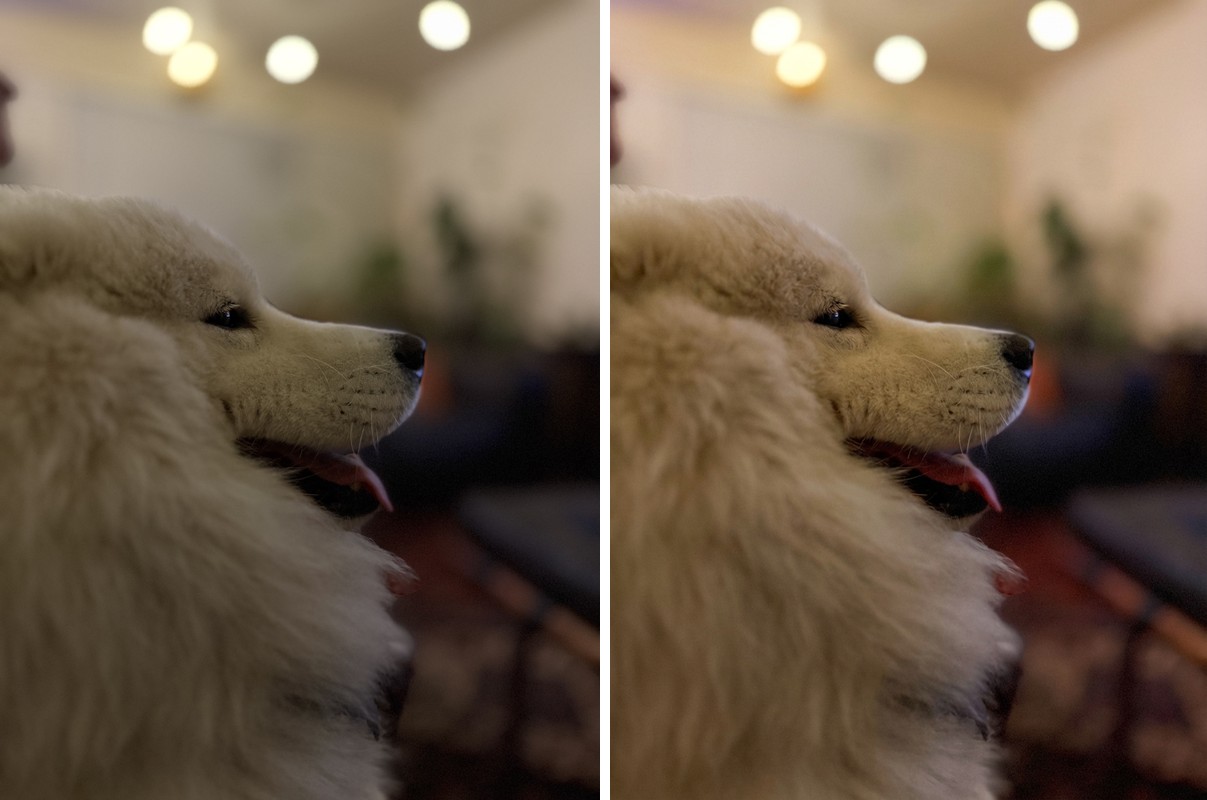
Before & After Comparison